





| Mon | Tue | Wed | Thu | Fri | ||
|---|---|---|---|---|---|---|
| AM | Ophthalmology ① | Azuma Hiroko | Azuma Hiroko | Azuma Hiroko | Azuma Hiroko | Azuma Hiroko |
| Ophthalmology ② | Yamamoto Kaori (2nd & 4th) | Closed | Shirahama Kumi | Shirahama Kumi | Shirahama Kumi | |
| PM | Ophthalmology | Azuma Hiroko※ | Azuma Hiroko※ | Azuma Hiroko※ | Azuma Hiroko※ | Azuma Hiroko※ |
| Pediatric Ophthalmology | Closed | Closed | Closed | Closed | Shirahama Kumi |
Reception Hours
8:00–10:00 (Returning patients)
14:00–16:30
Consultation Hours
8:30–12:00
14:30–17:30
※ Please note that clinic days, reception/consultation hours, and attending physicians are subject to change without notice due to temporary closures or physician absences.
Patients can book by phone (Tel: 0178-31-2222 / Weekdays 9:00–17:00).
For referrals from medical institutions, please see here.
Notices of Substitute / Cancelled Clinics
- Updates will be posted here once the schedule is confirmed.
※ The Pediatric Ophthalmology clinic accepts patients from newborns up to the end of junior high school (age 15).
The Pediatric Ophthalmology clinic treats strabismus and amblyopia. Contact lens consultations are not available.
Self-pay treatments such as myopia control therapy (low-concentration atropine eye drops) and orthokeratology are not offered.
Please Note
- Your pupils may be dilated for cataract or fundus examinations. Please do not drive a car, motorcycle, or bicycle to your appointment.
Overview
Ophthalmology diagnoses and treats conditions affecting the eyes.
Common conditions include cataracts, glaucoma, diabetic retinopathy, allergic conjunctivitis (hay fever), and trichiasis (ingrown eyelashes). Age-related macular degeneration is also increasing in our aging society.
If you have any concerning symptoms as described below, please do not hesitate to consult us.
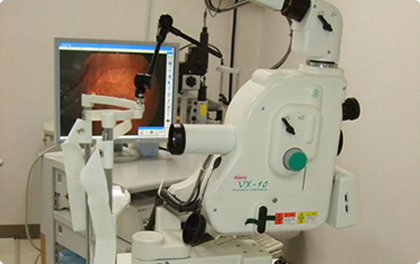
Conditions Treated
Cataracts
Cataracts are one of the most common conditions in an aging society. They occur when the lens inside the eye becomes cloudy, leading to reduced vision. While they can occur in younger people due to injury or diabetes, they are generally a natural part of aging — similar to hair turning gray.
A fundus examination can determine the degree of cloudiness. The definitive treatment is surgery, which we recommend for patients who meet the criteria (taking into account age, overall health, and living environment). Surgery is typically performed on one eye at a time over a 2-night, 3-day hospital stay, depending on the patient’s condition.
Glaucoma
Glaucoma is a condition in which the optic nerve is damaged, leading to reduced vision or a narrowing of the visual field. Chronic glaucoma progresses slowly with no noticeable symptoms, so patients often do not notice until significant visual field loss has occurred. Statistics suggest that 1 in 30 people over the age of 40 has glaucoma, making it a serious cause of blindness in Japan’s aging society. Early detection and treatment are essential — if glaucoma is identified during a health checkup, please come in for a fundus examination and intraocular pressure test.
Age-Related Macular Degeneration
Age-related macular degeneration is a condition in which abnormal aging changes occur in the macula — the central area of the retina — leading to reduced vision or visual field loss. Symptoms include blurring, distortion, or darkening in the center of the visual field, but patients often dismiss these as signs of normal aging. Some forms of the disease can progress rapidly. Treatment options are advancing, and it is important to visit an ophthalmologist as soon as possible. Our hospital offers the latest drug therapy using anti-VEGF (vascular endothelial growth factor) agents.
What is a Fundus Examination?
Eye drops called mydriatics are used to dilate the pupils, and then a light is shone into the back of the eye for examination. While you may experience some light sensitivity, there is no pain. However, the effects of the eye drops last for 5–6 hours, during which time you may find bright light uncomfortable and have difficulty focusing on nearby objects. As driving would be dangerous during this time, please use public transportation when coming for your appointment.
What is an Intraocular Pressure Test?
This test measures the pressure (firmness) inside the eye. It can be performed by placing a measuring instrument directly on the surface of the eye, or by directing a puff of air at the eye’s surface.
What is OCT (Optical Coherence Tomography)?
OCT is a state-of-the-art device that measures the condition of the retina — the eye’s equivalent of a camera film. It requires only a few seconds of looking into the machine, placing minimal burden on the eye, and can easily detect retinal edema (swelling) and thinning of the optic nerve fibers that are difficult to assess through surface examination alone.
Images can be taken without pupil dilation, making it useful for a wide range of conditions from glaucoma to age-related macular degeneration. Our hospital has been using OCT since 2010.
Our Doctors
Azuma Hiroko
| Department | Ophthalmology |
|---|
Shirahama Kumi
| Department | Ophthalmology |
|---|---|
| Specialty | General Ophthalmology |
| Board Certification | Board-certified Ophthalmologist (Japanese Ophthalmological Society) |
| Memberships | Japanese Ophthalmological Society |
Yamamoto Kaori
| Department | Ophthalmology |
|---|---|
| Specialty | Vitreoretinal Disease, General Ophthalmology |
| Board Certification | Doctor of Medicine (Ph.D.) Board-certified Ophthalmologist & Instructor (Japanese Ophthalmological Society) Certified Photodynamic Therapy (PDT) Physician |
| Memberships | Japanese Ophthalmological Society Japanese Society of Ophthalmic Diabetology Japanese Retina and Vitreous Society Japanese Society of Ophthalmic Surgery Japanese Society for Ocular Circulation |
応援医師
Enomoto Michiko
| Department | Ophthalmology |
|---|